About Ronald
Founders do not call me when something is broken. They call just before that.
When budget is about to be committed. When a quote is about to be signed. When a developer is about to be hired. When a release is being planned. Those are the moments when overview is worth more than extra capacity.
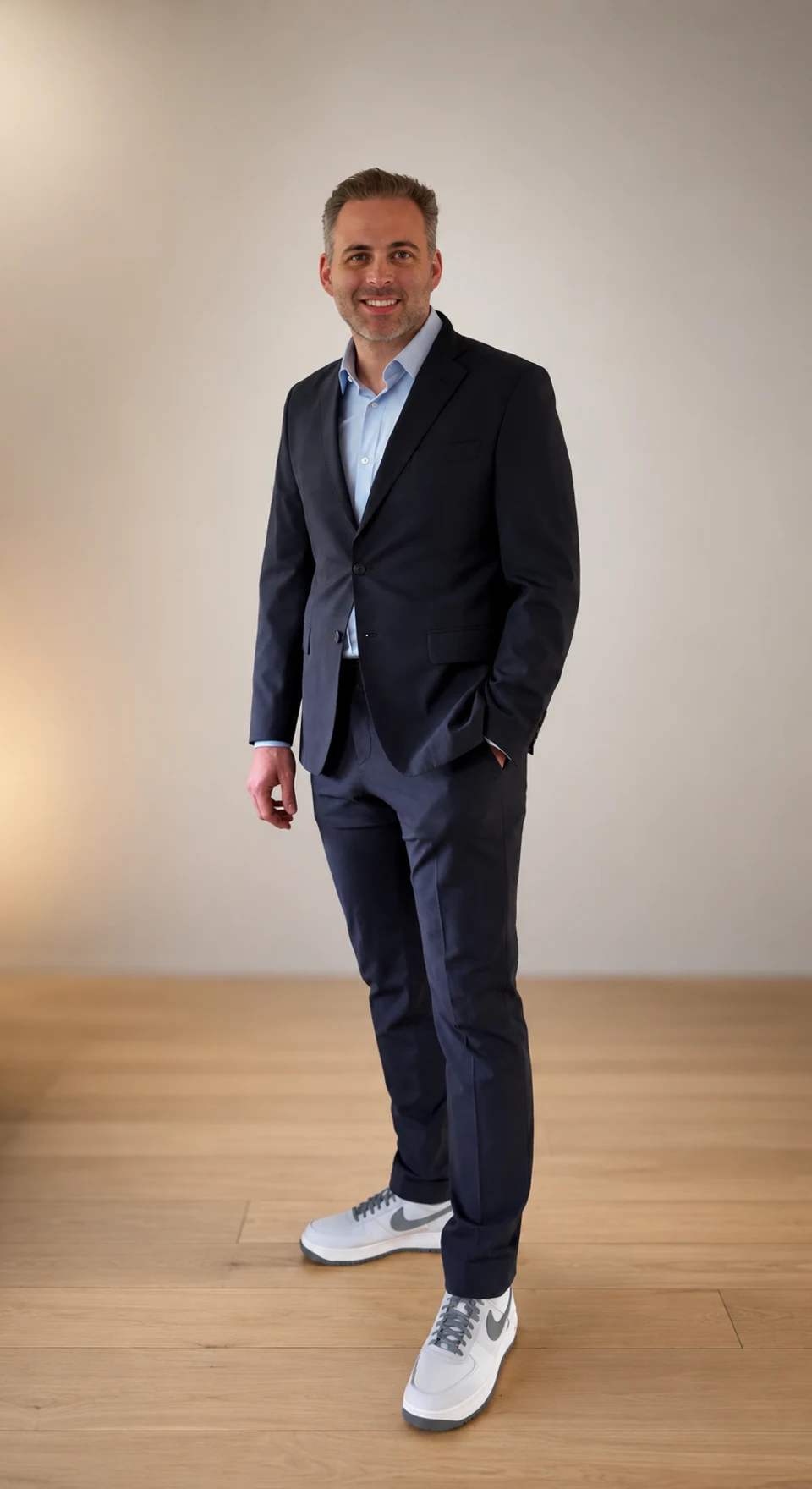
Twenty-two years of building, and hundreds of startup problems seen up close.
Products, SaaS, fintech, apps, hosting, GDPR, NIS2, internet security, teams, vendors, budgets, those domains tangle together the moment a real problem arrives. I bring technical knowledge and pattern recognition at the same time, because most problems are not just technical. They are about time, budget, risk, team, customers and execution at once.
- Products, SaaS & apps
- Fintech & payments
- Licensing & regulation
- GDPR & NIS2
- Internet security
- Infrastructure & web hosting
- Development & AI
- Hiring & people calls
Outcomes
Examples of outcomes.
- Reduced infrastructure complexity before scale.
- Avoided unnecessary cloud spend.
- Helped launch earlier with a smaller MVP.
- Prevented hiring before the problem was clearly defined.
- Challenged AI projects before expensive implementation.
- Identified risks in agency proposals before signing.
What founders are actually buying
Founders usually do not lack information. They lack context.
A problem with a product, a developer, a vendor, an architecture, a security approach or a compliance track is rarely just technical. It is about time, budget, risk, team, customers and execution at the same time.
That is why several things come together at once:
- technical knowledge
- product experience
- business context
- pattern recognition
- prioritisation
- a practical next step
The goal is not to gather more information. The goal is to get to a sharper answer faster.
What you get
Overview before you commit. A clear trade-off at a complex moment. One concrete next step you can act on.
How I think
Product, technology, regulation, security, people and business constraints are usually one problem, not separate conversations. I look at them at once, find the clear trade-off and the creative route through the complexity.
When I am most valuable
Just before budget. Just before a quote. Just before a hire. Just before a release. Just before a technical choice that gets expensive to reverse later.
What I will not do
I will not build your product, manage your project or replace a full-time CTO. I will not give vague reassurance. And I will not call an expensive plan sensible just because you are excited about it.
Things I often see happen
Recurring patterns, not rules. Each one is a moment where one short conversation can change the direction.
- An MVP becomes three times larger than needed.
- AI is added because it feels like progress.
- Kubernetes is chosen before there is an operational problem.
- Developers receive work without clear scope.
- Quotes look complete but miss assumptions and responsibilities.
- Teams keep building while the main problem is still unclear.
- Compliance is solved with overly heavy technology.
- Hosting costs grow faster than actual usage.
What founders usually call me for
- 01
Product & MVP
What belongs in the first version, what can wait and what makes it useful?
- 02
Development & architecture
Which technical direction fits the stage of the product?
- 03
Vendors & quotes
Does the scope, budget, responsibility and timing make sense?
- 04
Security, GDPR & compliance
Which requirements affect product choices without making everything unnecessarily heavy?
- 05
Teams & technical choices
When do you need more people, and when do you mostly need better priorities?
Why one conversation often pays for itself
You do not have to agree with everything. The conversation just has to be cheaper than the wrong move.
-
App & product
A founder wanted to build for nine months. We reduced the scope to a first version that could go live within a month.
Feedback came in sooner. The final solution improved.
-
Infrastructure
A team wanted to implement Kubernetes. On review, a much simpler architecture was enough.
Less complexity. Less maintenance. Lower cost.
-
AI
A founder wanted to add AI because everyone was doing it. On analysis, the real problem turned out to be somewhere else.
No AI project started. The underlying problem was solved.
-
Hosting
Hosting architecture simplified.
Lower operational cost. Less management. Fewer dependencies.
-
Vendors
Quotes and proposals reviewed critically. Not to get cheaper.
To prevent the wrong assumptions from being locked in.
-
Direction
Sometimes the value is not in the solution.
It is in changing the question being asked.
The biggest savings usually do not come from something getting cheaper. They come from a wrong move never being made.
Common questions
About Ronald.
A few practical things founders ask about background, focus and reach.
- Who is Ronald?
- Ronald is a Dutch founder and builder with 22+ years of experience across products, SaaS, fintech, mobile apps, hosting and infrastructure. He has built and bootstrapped multiple companies and now works as an independent sounding board for other founders who want to get sharper before they commit time, money or people.
- What is your technical background?
- Product development, SaaS architecture, fintech platforms, mobile apps, hosting and infrastructure, GDPR and NIS2, internet security, and the people behind the work. Not a specialist in one layer, a generalist across the stack, with depth where it helps.
- What kind of startups do you usually work with?
- Founders between a first prototype and €500k MRR, facing concrete problems without internal sparring. Solo founders, small teams or teams just starting to grow. Industries are broad: SaaS, fintech, B2B, consumer, regulated.
- Do you only work in the Netherlands or internationally?
- Both. The site is bilingual (NL/EN) and conversations can be in either language. International work in European time zones is fine; further out, limited but workable via async plus scheduled calls.
Founders do not need another voice cheering every idea. They need someone who thinks with them before they commit time, money or people.
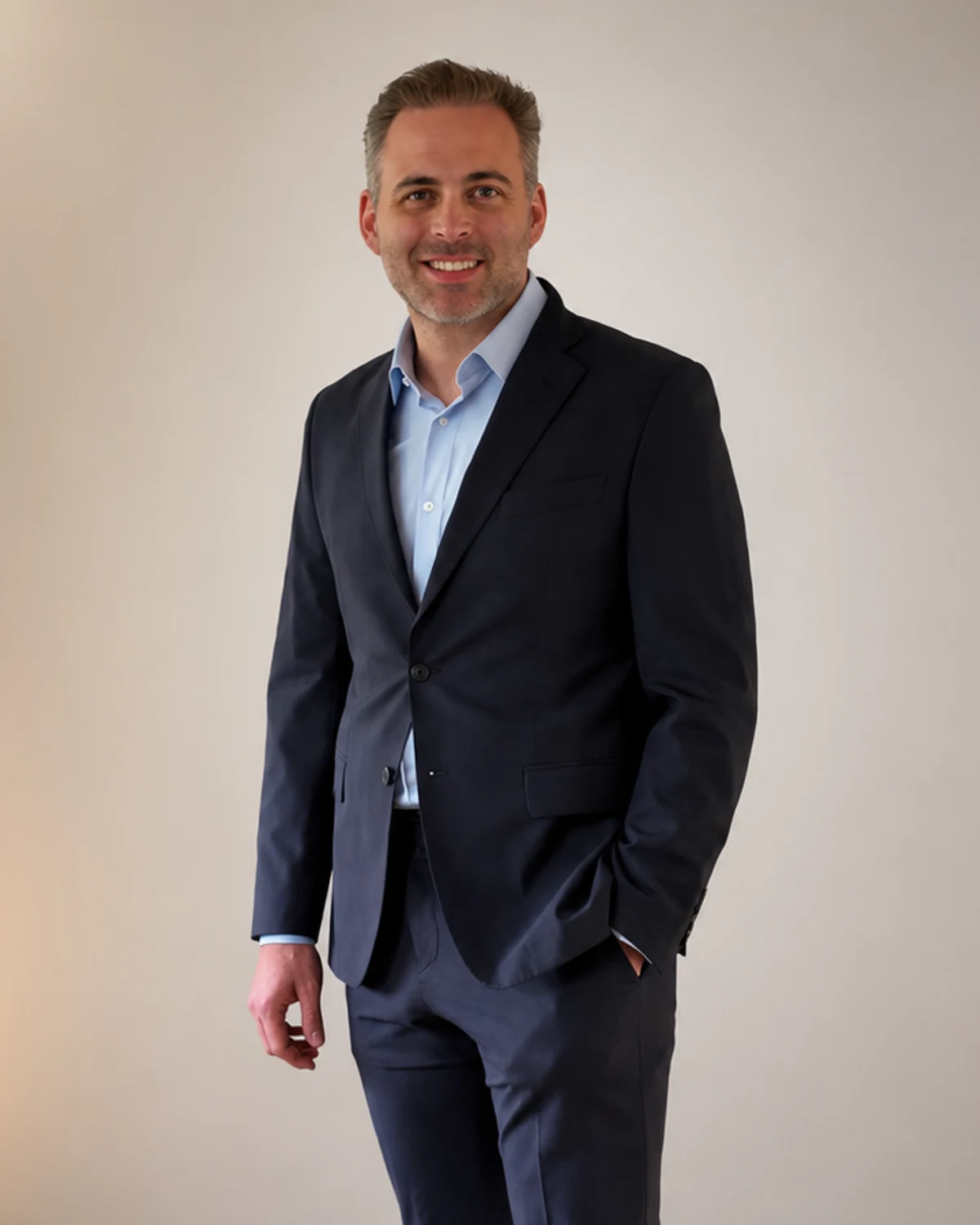 Ronald Founder advisor · the Netherlands
 Tell me what you’re struggling with.
Development is taking too long. Costs are rising. You’re unsure about a choice. Or your startup simply feels stuck. Let’s figure out what is really going on.